Posts

Best independent earwax removal specialist in Somerset

Best independent earwax removal specialist in Somerset


Stephen Neal is regarded as the best independent earwax removal specialist in the Bath, Bristol, Somerset and Wiltshire areas. Based in Keynsham he offers out of hours appointments.


Stephen Neal, hearing news:


Though public transportation is thought to be better for the environment in that it reduces greenhouse gas emissions, saves energy, and improves air quality, according to the Federal Transit Administration, there may be a negative effect on your personal health.

good hearing helps job performance

According to a recent Canadian study, commuters traveling during peak hours were exposed to maximum noise levels. A summary of the study’s results, published on the Hear-it AISBL—a nonprofit organization that provides information on hearing loss—website, show the results of the study, which was published in the Journal of Otolaryngology—Head & Neck Surgery. In this article, we’ll share the highlights, edited and adapted from the Hear-it website.

COMMUTING STYLES

Researchers looked at two different commuting situations among Toronto residents: people waiting for a streetcar/bus as compared to people walking/biking to a subway. Bikers were exposed to louder noise than those walking or driving a vehicle. Noise levels were higher for those waiting on a subway platform as compared to those in the subway car. And, finally, research showed that those waiting at bus stops were exposed to the loudest noise of all.

KPIs on your business dashboard

PEAK NOISE

Though commuters often only experienced short and intense bursts of impulse noise exceeding the 114 dBA limit recommended by the EPA, researchers concluded this can be just as harmful as prolonged noise exposure. Up to 20% of the peak mean noise measurementsexceeded 114 dBA, and up to 85% of measurements at bus stops were higher than 120 dBA, according to the study. Researchers were concerned that prolonged exposure could lead to noise-induced hearing loss.


https://ear-wax-removal.co.uk

Earwax removal Bristol and Bath

Ear wax removal Bristol and Bath by Stephen Neal


Out of hours earwax removal available weekly.

Brainwave Abnormality Could Be Common to Parkinson’s Disease, Tinnitus, Depression

Stephen Neal news update:

A brainwave abnormality could be a common link between Parkinson’s disease, neuropathic pain, tinnitus, and depression—a link that authors of a new study suggest could lead to treatment for all four conditions.

Dr Sven Vanneste, an associate professor in the School of Behavioral and Brain Sciences at The University of Texas at Dallas, is one of three authors of a paper in the journal Nature Communications regarding thalamocortical dysrhythmia (TCD), a theory that ties a disruption of brainwave activity to the symptoms of a wide range of neurological disorders, The University of Texas announced.
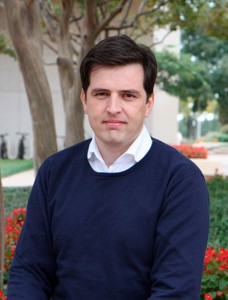
Dr Sven Vanneste, associate professor in the School of Behavioral and Brain Sciences.

Dr Sven Vanneste, associate professor in the School of Behavioral and Brain Sciences.

Vanneste and his colleagues—Dr Jae-Jin Song of South Korea’s Seoul National University and Dr Dirk De Ridder of New Zealand’s University of Otago—analyzed electroencephalograph (EEG) and functional brain mapping data from more than 500 people to create what Vanneste believes is the largest experimental evaluation of TCD, which was first proposed in a paper published in 1996.

“We fed all the data into the computer model, which picked up the brain signals that TCD says would predict if someone has a particular disorder,” Vanneste said. “Not only did the program provide the results TCD predicted, we also added a spatial feature to it. Depending on the disease, different areas of the brain become involved.”

The strength of our paper is that we have a large enough data sample to show that TCD could be an explanation for several neurological diseases.

Brainwaves are the rapid-fire rhythmic fluctuations of electric voltage between parts of the brain. The defining characteristics of TCD begin with a drop in brainwave frequency—from alpha waves to theta waves when the subject is at rest—in the thalamus, one of two regions of the brain that relays sensory impulses to the cerebral cortex, which then processes those impulses as touch, pain, or temperature.

A key property of alpha waves is to induce thalamic lateral inhibition, which means that specific neurons can quiet the activity of adjacent neurons. Slower theta waves lack this muting effect, leaving neighboring cells able to be more active. This activity level creates the characteristic abnormal rhythm of TCD.

“Because you have less input, the area surrounding these neurons becomes a halo of gamma hyperactivity that projects to the cortex, which is what we pick up in the brain mapping,” Vanneste said.

While the signature alpha reduction to theta is present in each disorder examined in the study—Parkinson’s, pain, tinnitus, and depression—the location of the anomaly indicates which disorder is occurring.

“If it’s in the auditory cortex, it’s going to be tinnitus; if it’s in the somatosensory cortex, it will be pain,” Vanneste explained. “If it’s in the motor cortex, it could be Parkinson’s; if it’s in deeper layers, it could be depression. In each case, the data show the exact same wavelength variation—that’s what these pathologies have in common. You always see the same pattern.”

EEG data from 541 subjects was used. About half were healthy control subjects, while the remainder were patients with tinnitus, chronic pain, Parkinson’s disease, or major depression. The scale and diversity of this study’s data set are what set it apart from prior research efforts.

“Over the past 20 years, there have been pain researchers observing a pattern for pain, or tinnitus researchers doing the same for tinnitus,” Vanneste said. “But no one combined the different disorders to say, ‘What’s the difference between these diseases in terms of brainwaves, and what do they have in common?’ The strength of our paper is that we have a large enough data sample to show that TCD could be an explanation for several neurological diseases.”

With these results in hand, the next step could be a treatment study based on vagus nerve stimulation—a therapy being pioneered by Vanneste and his colleagues at the Texas Biomedical Device Center at UT Dallas. A different follow-up study will examine a new range of psychiatric diseases to see if they could also be tied to TCD.

For now, Vanneste is glad to see this decades-old idea coming into focus.

“More and more people agree that something like thalamocortical dysrhythmia exists,” he said. “From here, we hope to stimulate specific brain areas involved in these diseases at alpha frequencies to normalize the brainwaves again. We have a rationale that we believe will make this type of therapy work.”

The research was funded by the National Research Foundation of Korea(NRF) and the Seoul National University Bundang Hospital.

Original Paper: Vanneste S, Song J-J, De Ridder D. Thalamocortical dysrhythmia detected by machine learning. Nature Communications. 2018;9(1103)

Source: Nature Communications, University of Texas at Dallas

Image: University of Texas at Dallas

http://www.ear-wax-removal.co.uk

http://www.keynshamhearing.co.uk

Earwax removal Corsham Wiltshire

Children with Hearing Loss May Experience Higher Rate of Bullying

Stephen Neal-Earwax removal, Corsham, Wiltshire

If you are not as close to Keynsham as to Devizes we would recommend our sister company

Wiltshire ear clinic 

balance issues in children

New UT Dallas research indicates that children and adolescents with hearing loss experience higher rates of peer victimization, or bullying, than children with typical hearing, UT Dallas announced in a press release on its website.

In the study, approximately 50% of the adolescents with hearing loss said they were picked on in at least one way in the past year. Previous studies show about 28% of adolescents in the general population report being bullied.

“I thought more children and adolescents with hearing loss would report getting picked on, but I did not expect the rates to be twice as high as the general population,” said Dr Andrea Warner-Czyz, an assistant professor in the School of Behavioral and Brain Sciences and a researcher at the Callier Center for Communication Disorders.

Dr Andrea Warner-Czyz

Dr Andrea Warner-Czyz

The study, which appears in the journal Exceptional Children, showed the type of bullying experienced by youth and adolescents with hearing loss mimics patterns in children with other special needs, with significantly higher rates of social exclusion.

More than one-fourth of adolescents with hearing loss indicated they felt left out of social activities, compared to only 5% of the general population reporting exclusion. These findings parallel published reports of fewer invitations to social events, lower quantity and quality of friendships, and higher loneliness in children and adolescents with hearing loss.

Researchers conducted an online survey of 87 children and adolescents ages 7 to 18 who wear cochlear implants or hearing aids for hearing loss. If they indicated they were picked on at all, the survey automatically generated follow-up questions on how often it occurred and why they thought they were targeted.

Approximately 45% said they did not know why, 20% said it was because of their hearing loss or cochlear implant, and 20% said it was because of how they looked or how they acted.

Based on information provided by parents and from other studies, Warner-Czyz said the problems with peers might reflect communication difficulties related to auditory skills.

“Sometimes they miss puns or a play on words, or other cues that have to do with humor. Or when something is said very quietly or in a noisy location, the student with hearing loss might miss it. And that can make them feel like an outcast, or it can make them look like an outcast,” she said.

“Friendships are important to most young people, but I believe are especially important for children with hearing loss.”
said Warner-Czyz. Alternatively, she said peer problems might indicate a broader issue of not recognizing social cues from conversation or distinguishing true friendship from acquaintances.

Researchers have previously said having at least one good friend is a protective factor against bullying. Most children in this study cited several or lots of friends, but anecdotal reports from parents and clinicians questioned the veracity of these friendships.

“Friendships are important to most young people, but I believe they are especially important for children with hearing loss,” said Warner-Czyz. “Anything parents can do to facilitate social interaction and friendship and letting them learn how to be a friend and who is a friend is critical.”

She said future research will delve more deeply into the reasons behind differences in friendship quality and peer victimization in children and adolescents with hearing loss to guide evidence-based, targeted therapeutic intervention and potentially contribute to effective anti-bullying programs geared toward children with special needs. She said these factors might go beyond individual youth characteristics to include a microsystem of school and home settings.

The research is part of a larger study exploring the quality of life in children and adolescents with cochlear implants.

Original Paper: Warner-Czyz AD, Loy B, Pourchot H, White T, Cokely E. Effect of hearing loss on peer victimization in school-age children. Exceptional Children. 2018;84(3):280-297.

Source: UT Dallas, Exceptional Children

Image: UT Dallas

www.ear-wax-removal.co.uk

Frome & Somerset earwax removal

City, University of London to Pilot Language and Reading Intervention for Children

If you are not as close to Keynsham as to Devizes we would recommend our sister company

Wiltshire ear clinic 

http://www.dreamstime.com/royalty-free-stock-photos-school-kids-classroom-lesson-children-image31061178

Researchers from City, University of London have been awarded £97k ($USD approximately $136,479) from the Nuffield Foundation to pilot a language and reading intervention with 120 children in their first year of formal education, the school announced on its website.

Involving Dr Ros Herman, Professor Penny Roy, and Dr Fiona Kyle from the School of Health Science’s Division of Language and Communication Science, in collaboration with Professor Charles Hulme from Oxford University, the study—which is reportedly the first reading intervention study to include both deaf and hearing children—will trial the new intervention in primary schools for a year and compare outcomes with other schools that offer the standard literacy teaching.

The research team have shown in previous research that many severely and profoundly deaf children have significant reading delays, yet are typically excluded from reading intervention research.

In this new study, teachers will be trained to deliver the intervention program, comprising systematic phonics teaching alongside a structured vocabulary program, during the school literacy hour. The study will investigate whether all children, or only specific groups of children, benefit from the integrated program and whether a full-scale evaluation is merited.

Dr Herman said, “Our previous research has revealed the scale of reading difficulties among deaf children. Our findings suggest that deaf children will benefit from specialist literacy interventions such as those currently offered to hearing children with dyslexia. In addition, deaf children and many hearing children require ongoing support to develop the language skills that underlie literacy.

“As a result we hope our new study, which will pilot a combined language and reading intervention, will address these issues so that teachers can provide the vital support needed to prevent both hearing and deaf children from unnecessarily falling behind their peers.”

Source: City, University of London

You can also contact Stephen via www.ear-wax-removal.co.uk

Researchers Find Increased Risk of Hearing Loss Among Smokers

Researchers Find Increased Risk of Hearing Loss Among Smokers

Stephen Neal the earwax expert in Somerset

shutterstock_154685816

New research published in Nicotine & Tobacco Researchhas shown evidence that smoking is associated with hearing loss, according to a news release from the journal’s publisher, Oxford Press.

The study—which included 50,000 participants over an 8-year period—looked at data from annual health checkups, which included factors such as smoking status, number of cigarettes smoked per day, and the duration of smoking cessation on hearing loss, according to the release. Researchers calculated a 1.2 to 1.6 increased risk of hearing loss among smokers as compared to those who had never smoked before.

The risk of hearing loss decreased five years after smoking cessation.

For additional information, please click here to view the release on Science Daily’s website.

Original Paper: Hu H, Sasaki N, Ogasawara T, et al. Smoking, smoking cessation, and the risk of hearing loss: Japan epidemiology collaboration on occupational health study. Nicotine & Tobacco Research. March 14, 2018.

Source: Science Daily, Nicotine & Tobacco Research, Oxford Press

GN Hearing Launches Rechargeable Battery Option for ReSound Linx 3D

Stephen Neal the earwax specialist for Bath, Bristol and the Somerset area.

image

GN Hearing—the medical device division of the GN Group—has introduced a rechargeable battery option for the ReSound LiNX 3D hearing aids, the company announced. The rechargeable battery solution, available in North America and other major markets from September 1, gives ReSound users more options to choose from. The rechargeable option is also available for Beltone Trust in North America, and from September 1, this will be extended to other major markets.

The rechargeable battery option is made available based on an understanding of user expectations as well as a commitment to empower users to choose the solution best suited for their needs and preferences. The announcement follows GN Hearing’s release of the innovative 5thgeneration 2.4 GHz wireless technology ReSound LiNX 3D hearing aids, which offer unmatched sound quality, an enhanced fitting experience, and comprehensive remote fine-turning, giving users a new hearing care experience, GN Hearing said.

According to the company, ReSound LiNX 3D rechargeable has all of the benefits of ReSound LiNX 3D, now combined with the all-day power of a rechargeable battery. With overnight charging, users will experience the advantage of all-day power, without the need to change batteries.

ReSound Linx 3D rechargeable accessory.

ReSound LiNX 3D rechargeable accessory.

“GN Hearing is pleased to provide yet another option for hearing aid users, built on our commitment to providing unmatched sound quality and user experience,” said Anders Hedegaard, president & CEO, GN Hearing. “This new rechargeable battery solution allows hearing care professionals to offer an additional option to their clients, and gives hearing aids users even more choices to tailor their hearing experience to their unique preferences,” he added.

Source: GN Hearing 

Image: GN Hearing 

Visual Cues May Help Amplify Sound, earwax can be the cause.

Visual Cues May Help Amplify Sound, University College London Researchers Find

Published on 

Ear wax removal, somerset, Wiltshire, Bath, Bristol, Norton St Philip, Glastonbury

Ear wax removal and hearing aids, Bath, Bristol, Frome, Glastonbury

Looking at someone’s lips is good for listening in noisy environments because it helps our brains amplify the sounds we’re hearing in time with what we’re seeing, finds a new University College London (UCL)-led study, the school announced on its website.

The researchers say their findings, published in Neuron, could be relevant to people with hearing aids or cochlear implants, as they tend to struggle hearing conversations in noisy places like a pub or restaurant.

The researchers found that visual information is integrated with auditory information at an earlier, more basic level than previously believed, independent of any conscious or attention-driven processes. When information from the eyes and ears is temporally coherent, the auditory cortex —the part of the brain responsible for interpreting what we hear—boosts the relevant sounds that tie in with what we’re looking at.

“While the auditory cortex is focused on processing sounds, roughly a quarter of its neurons respond to light—we helped discover that a decade ago, and we’ve been trying to figure out why that’s the case ever since,” said the study’s lead author, Dr Jennifer Bizley, UCL Ear Institute.

In a 2015 study, she and her team found that people can pick apart two different sounds more easily if the one they’re trying to focus on happens in time with a visual cue. For this latest study, the researchers presented the same auditory and visual stimuli to ferrets while recording their neural activity. When one of the auditory streams changed in amplitude in conjunction with changes in luminance of the visual stimulus, more of the neurons in the auditory cortex reacted to that sound.

“Looking at someone when they’re speaking doesn’t just help us hear because of our ability to recognize lip movements—we’ve shown it’s beneficial at a lower level than that, as the timing of the movements aligned with the timing of the sounds tells our auditory neurons which sounds to represent more strongly. If you’re trying to pick someone’s voice out of background noise, that could be really helpful,” said Bizley.

The researchers say their findings could help develop training strategies for people with hearing loss, as they have had early success in helping people tap into their brain’s ability to link up sound and sight. The findings could also help hearing aid and cochlear implant manufacturers develop smarter ways to amplify sound by linking it to the person’s gaze direction.

The paper adds to evidence that people who are having trouble hearing should get their eyes tested as well.

The study was led by Bizley and PhD student Huriye Atilgan, UCL Ear Institute, alongside researchers from UCL, the University of Rochester, and the University of Washington, and was funded by Wellcome, the Royal Society; the Biotechnology and Biological Sciences Research Council (BBSRC); Action on Hearing Loss; the National Institutes of Health (NIH), and the Hearing Health Foundation.

Original Paper: Atilgan H, Town SM, Wood KC, et al. Integration of visual information in auditory cortex promotes auditory scene analysis through multisensory binding. Neuron. 2018;97(3)[February]:640–655.e4. doi.org/10.1016/j.neuron.2017.12.03

Source: University College London, Neuron

GN Store Nord Develops Device to Protect Soldiers’ Hearing

GN Store Nord Develops Device to Protect Soldiers’ Hearing

Published on 

soldier aims gun

GN Store Nord has announced a “first of its kind, fully fledged hearing protection solution, enabling defense and security forces to hear more, do more, and be more.” With this advanced tactical hearing-protection solution, GN reports that it is leveraging unique leading competencies within intelligent audio solutions in both hearing aids and headsets to create an unparalleled noise management solution. The product will be manufactured at its Bloomington, Minn, facility where ReSound is also located.

The global market for military communication systems is estimated to be about $630 million, and features competitors such as Peltor (3M), INVISIO, Silynx, Racal Acoustics, and MSA Sordin, according to long-time hearing industry analyst Niels Granholm-Leth of Carnegie Investment Bank in Copenhagen.  GN has embarked on several projects in its GN Stratcom organization, which is currently part of GN Hearing, although the company could eventually establish it as a stand-alone division alongside its Hearing (ReSound, Beltone, and Interton) and Headset divisions (Jabra).

The new patented hearing protection solution is designed specifically for defense and security forces. GN says the solution offers the user a communication headset which is designed to be comfortable, highly durable, and protects the user against high volume noise. At the same time, by leveraging GN’s expertise within situational awareness, the solution allows its user to clearly identify important sound in 360°.

Anders Hedegaard

Anders Hedegaard

“The GN Group encompasses consumer, professional, and medical grade hearing technology under the same roof,” says CEO of GN Hearing, Anders Hedegaard. “This unique platform makes it possible to expand GN’s business into adjacent opportunities within the sound space. With our user-centric approach we aim to be the leader in intelligent audio solutions to transform lives through the power of sound.”

GN will be starting to build a small, swift group related to this new business opportunity. This year, GN will participate in military tenders in the United States and with other NATO-countries. The new product line will, under the name GN FalCom, include:

  • Comfort. Designed for optimal physical comfort allowing for multiple hours of use in extreme combat situations;
  • Clarity. Enables users to localize sounds all around them without the need to remove the earpiece. To maintain high quality communications at all times, GN FalCom will integrate seamlessly with military radio technology, and
  • Protection. Allows users to stay connected while benefitting from noise protection. For example, users will experience the highest level of safety without blocking out wanted sounds.

The  hearing protection solution builds on GN’s expertise in sound processing from both GN Hearing and GN Audio—and across R&D teams in the United States and Denmark. It is a successful result of corporate level investments made through GN’s Strategy Committee guided initiatives to explore opportunities outside of, but related to, GN’s existing business areas. According to the company, the hearing protection solution will be manufactured at GN’s existing production facilities in Bloomington, Minn, and will not impact GN’s financial guidance for 2018.

Oticon Opn™ A new hearing aid.

Oticon Opn™ A new digital hearing aid.


Stephen Neal audiologist at the Keynsham Hearing Centre knows all about hearing aids and earwax removal using Microsuction and ear irrigation techniques, and shares the latest hearing aid from Oticon. Digital hearing instruments really are the latest option for a living in a digital world. Contact Stephen Neal to book an appointment at his Keynsham hearing centre. Stephen also does out of hours appointments too.

Hearing

The challenge of hearing clearly amidst background noise is a complaint hearing care professionals commonly encounter. Houston-based audiologist Jana Austin discusses how the Oticon Opn helped Bryan Caswell, a chef, manage the “tornado” of background noise coming at him from all directions in a busy restaurant environment. With its OpenSound Navigator and Spatial Sound LX working in tandem to identify sounds and manage noise, Caswell can hear a conversation from across the kitchen that he likens to a dart of sound that he’s catching. For Austin, the Opn reaffirms her ability to improve a patient’s quality of life.

Stephen Neal at Keynsham hearing centre near Bristol and Bath can help with supply and fit of this hearing aid or any other hearing aid on the market today. With Digital hearing instruments now so advanced you will be surprised on how yoru life can be totally changed within a few days of fitting.

Stephen Neal is a registered HCPC dispenser and works with all the large hearing aid/instrument manufacturers. With his expert advice and fitting, you will be surprised on how digital technology in the hearing world really has changed in recent years. Ask Stephen for a demo on how connecting with your smart phone, iPad and T.V. can transform your world.

Ear wax removal

Micro-suction, Microsuction, earwax removal, Bath, Bristol, keynsham,

Stephen Neal, specialist ear wax and micro suction technique. Based in Keynsham

Earol :http://www.lloydspharmacy.com/en/earol-olive-oil-spray

MICROSUCTION (EAR WAX REMOVAL)