Posts

Cheapest ear wax removal Somerset?


Cheapest ear wax removal Somerset?


Cheapest ear wax removal Somerset by Stephen Neal ear wax removal specialist. Based at the Keynsham hearing centre situated between Bath and Bristol.  The very latest digital hearing aids are availabe now along with the state of the art hearing tests at the small family owned independent hearing service for the Somerset area and beyond.  Stephen Neal is a hearing wax removal expert and uses Microsuction and the traditional water irrigating technique. Out of hours appointments are aways available, please call Anita on reception to book your out of hours appointment.

Click here to watch our earwax removal video: 

Keynsham hearing news:

Starkey Releases World’s First Hearing Aid with Fall Detection and Alerts to Livio AI Users

Published on December 18, 2018
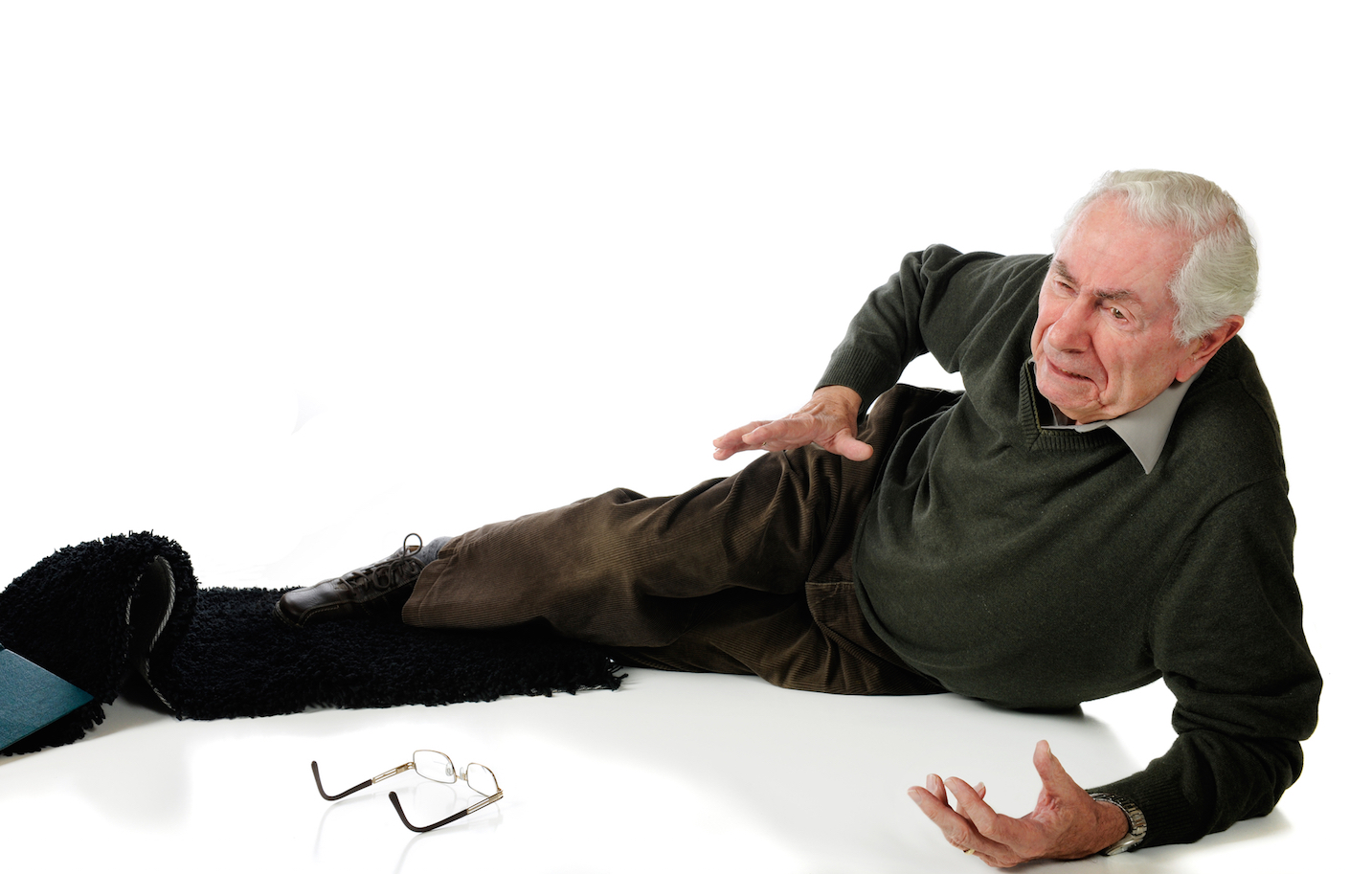
balance problems increase risk for fallsStarkey Hearing Technologies, Eden Prairie, Minn, has released its new Fall Detection and Alert feature in Livio AI hearing aids to a limited number of hearing professionals, and plans to offer the feature to all dispensing professionals and their clients in late February, according to CTO Achin Bhowmik, PhD, in an interview with Hearing Review on Tuesday, December 18. Using integrated sensors, the Fall Detection and Alert feature is designed to automatically detect falls and send messages to as many as three contacts.

Fall detection sensors are currently implemented in all Livio AI devices as part of its standard hardware platform, and Starkey has been working on the Fall Alert feature to maximize its utility for end users prior to the system’s widespread implementation.

Falls are a massive public health problem, particularly for older adults. It’s estimated that injuries due to falls will account for $67.7 billion in public health spending by 2020, and according to the National Council on the Aging (NCOA) falls are currently responsible for an older adult being admitted to a US emergency room every 11 seconds. Additionally, people with hearing loss are particularly susceptible to falls. A Johns Hopkins study suggests that having hearing loss triples the risk of falls for people age 40 and older—and the findings hold up regardless of whether their hearing loss is moderate or severe.
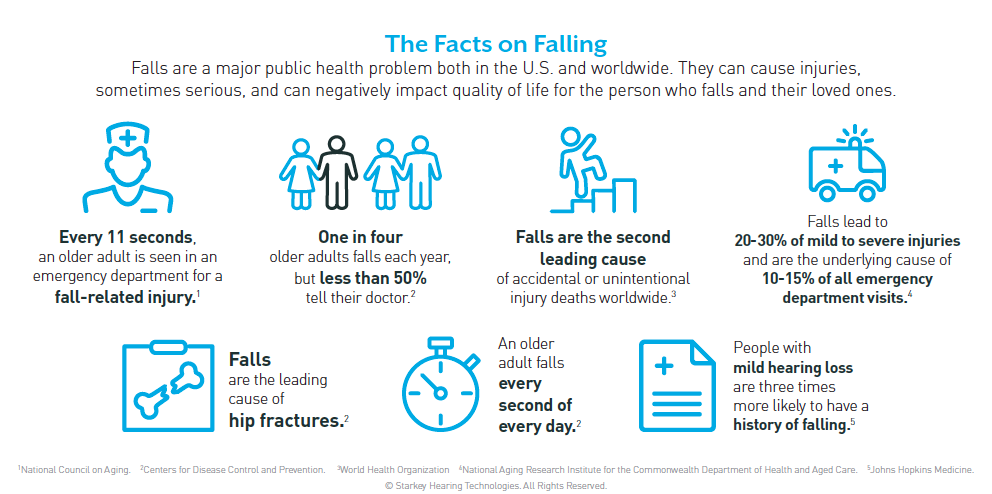
StarkeyFallsInfoGraphic

How Starkey Fall Detection and Alerts work. Starkey’s new Fall Detection system is said to have several benefits over existing stand-alone medical alert systems, which are typically attached to a lanyard around the neck. “The first key advantage is that a hearing aid is almost always in your ear during your active hours, making for one less thing to carry or remember. One of the major problems with medical alert systems is getting people to wear them,” says Bhowmik. “Second, we have two fall detection sensors [in binaural fittings] for the right side and the left side, whereas most fall detection systems have only one. And the way the two sensors are spaced apart and the way in which you hold your head, we can get better and more accurate results than neck-worn sensors designed to detect falls.”

Bath Hearing Centre
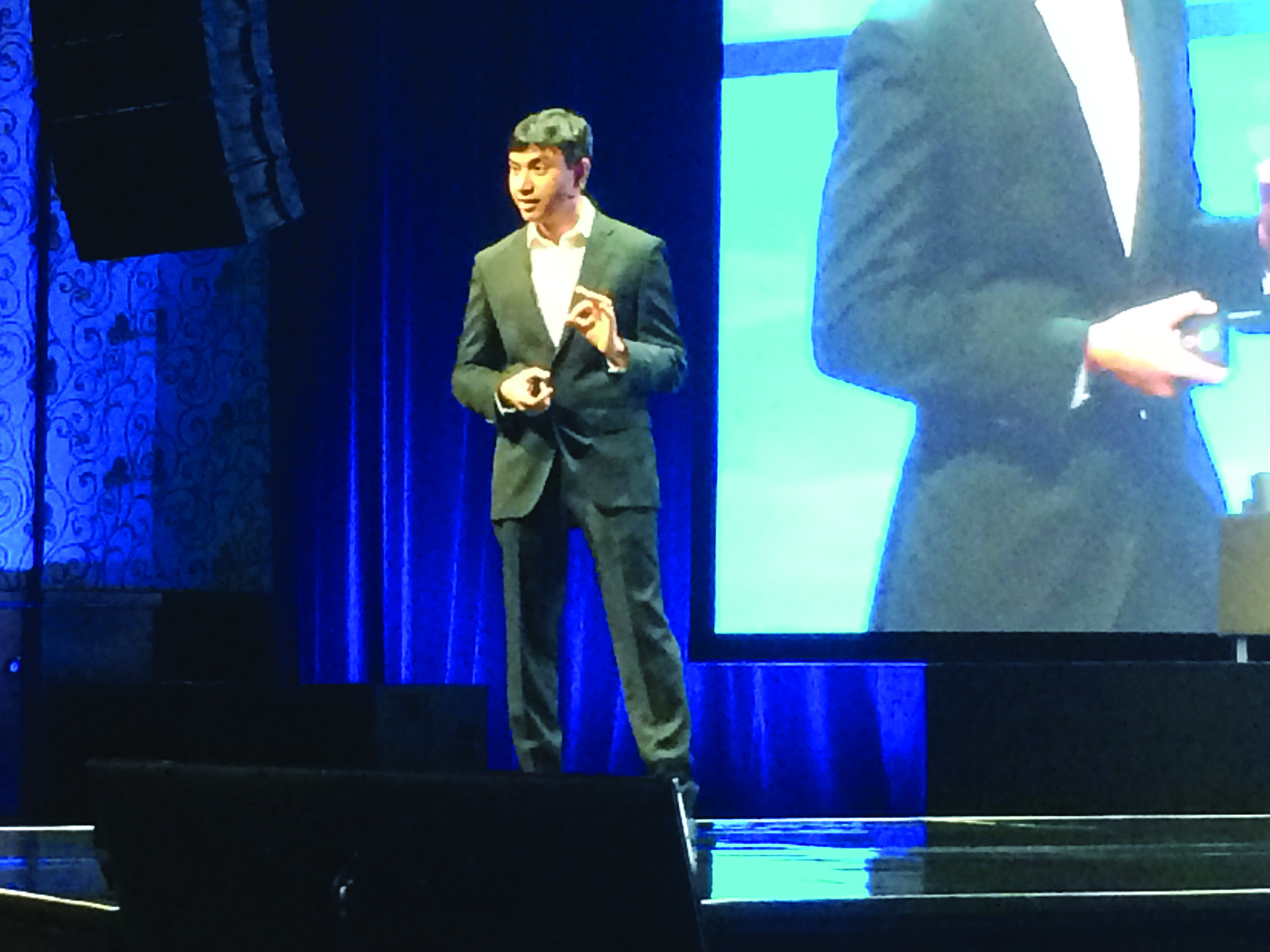
Starkey CTO Achin Bhowmik spoke about the possibility of fall detection and other sensor-based capabilities at the 2018 Starkey Expo held in January.

Starkey CTO Achin Bhowmik spoke about the possibility of fall detection and other sensor-based capabilities at the 2018 Starkey Expo held in January.

According to Bhowmik, part of Starkey’s recent research has revolved around what constitutes an actual fall as opposed false-positives such as quick downward movements or even accidentally dropping the hearing aid. “If you take the hearing aid off your ear and drop it on the ground, you will not get a false-positive for falling with Livio AI,” says Bhowmik. “We have been working on [eliminating false-positives] for over a year. A good AI system is only as good as the data you train the system with. In this particular case, if the left hearing aid detects a fall, it immediately checks with the right hearing aid to see if the data matches what would indicate a fall for the system. Unless it detects a fall from the hearing aids in tandem for both the right and left sides of the head, the device will eliminate those non-fall events and false-positives.”
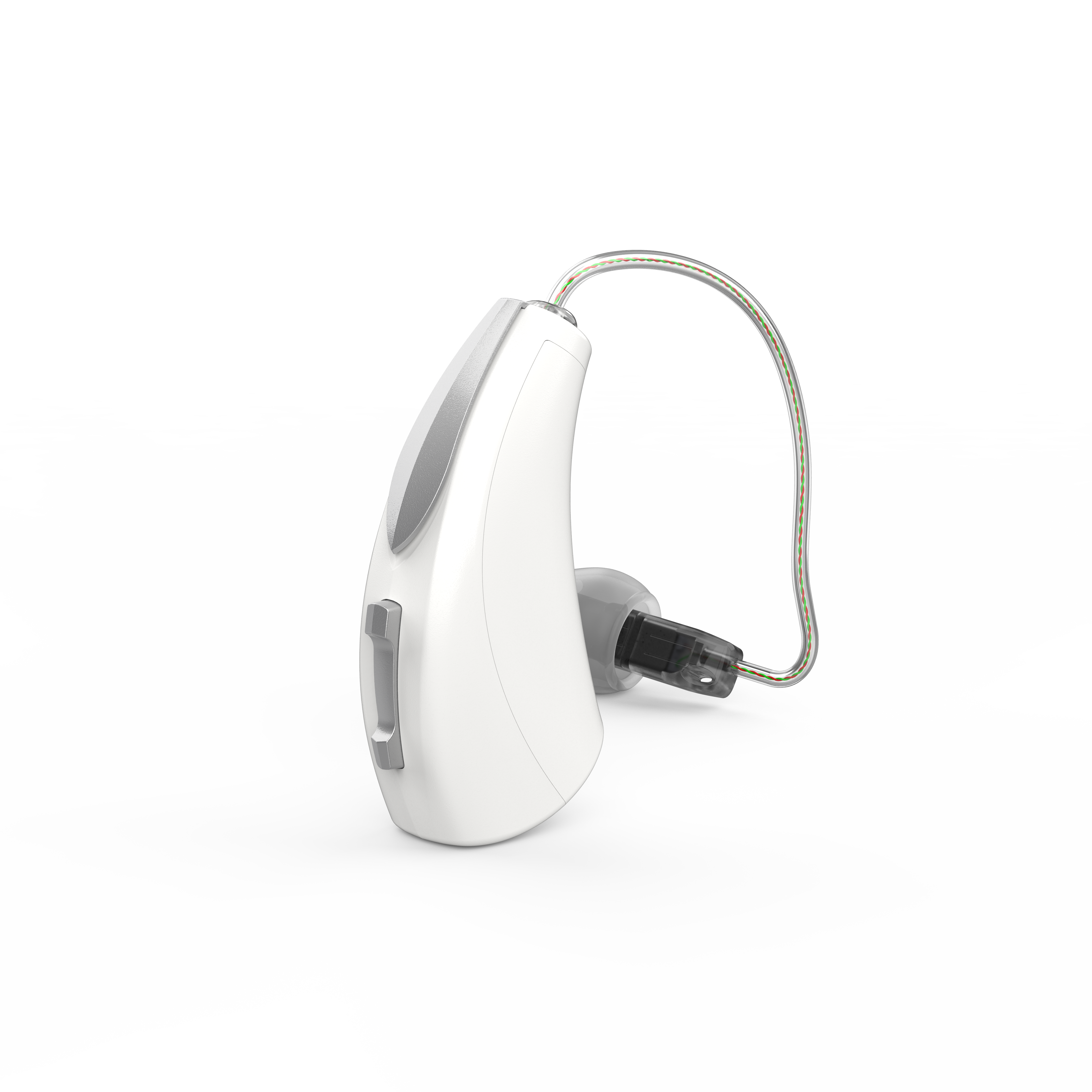
Starkey Livio AI hearing aid

Starkey Livio AI hearing aid.

The hearing care professional will be able to activate Fall Detection and Alerts through an easy-to-use interface within the fitting software for Starkey’s Livio AI hearing aids. The user can then enter the Auto Alert contacts—up to three people who are to be alerted in the event of a fall within the Thrive Hearing App. When a fall is detected by the system, an audio prompt asks the user if they have fallen. He or she then has 60 seconds to provide an Event Cancellation and stop the outgoing Fall Alert messages from being sent to their designated contacts. If the hearing aid user has fallen and elects to send the Fall Alert message to his/her contacts, they receive confirmation when each contact has been successfully reached.

Cheapest ear wax removal Somerset?

The system also allows for a Manual Alert which can be activated by simply pressing the hearing aid button, sending an alert for a fall or non-fall related event. “Maybe you didn’t fall, but instead just felt dizzy or were otherwise forced to sit down on the floor,” explains Bhowmik. “Obviously, this is not a fall. But you can still use the Manual Alert to get help when you need it. By tapping a button, you can send an automatic alert to your contacts, telling them you need assistance.”

This is just another step in the direction of making the hearing aid a multi-purpose, multi-functional device, according to Starkey.

To learn more about Starkey’s Livio AI you can visit: https://www.starkey.com/hearing-aids/technologies/livio-artificial-intelligence-hearing-aids

If you live in the Somerset or Devon area and need ear wax removal please click here.
Hearing aids Keynsham Somerset

Hearing aids Keynsham Somerset


Hearing aids & Ear wax removal Somerset

Hearing aids in Somerset at the Keynsham hearing centre. We are a family owned truly independent hearing centre based in Keynsham Somerset.

We supply and fit the very latest digital hearing aids from all the leading hearing aids manufacturers. We also conduct ear wax removal using Microsuction and the traditional water irrigation technique.

You can find out more about our ear wax Micro-suction removal here.


Stephen Neal News:

GN ReSound Showcases New Partnership with Google and LiNX Quattro at EUHA 2018

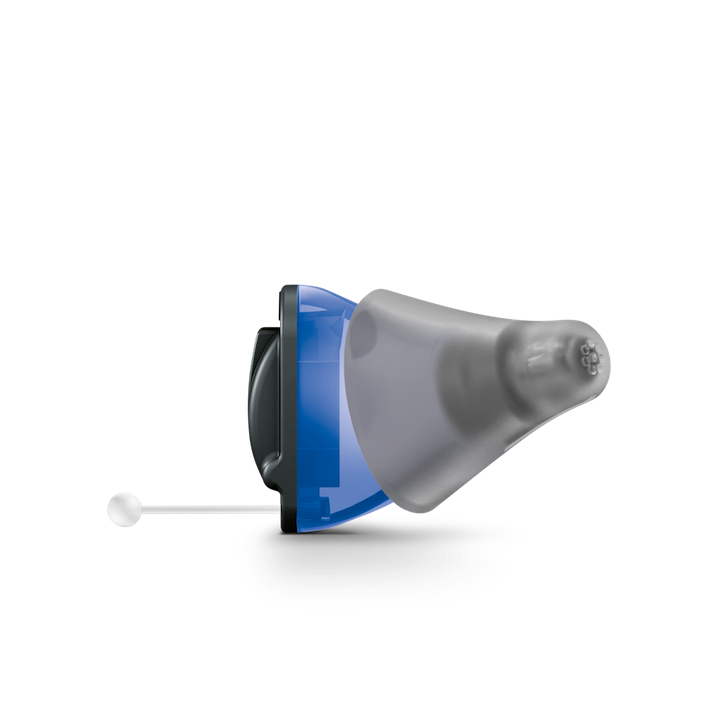
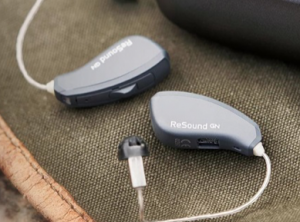
ReSound LiNX Quattro.

Hearing aids and Ear wax removal Keynsham Somerset

    ReSound LiNX Quattro.

With today’s start of the European Union of Hearing Aid Acousticians(EUHA) Congress in Hannover, Germany, GN ReSound has announced a new partnership with Google that will provide a full spectrum of direct streaming to hearing aids from Android devices, and the company is showcasing what the company is calling a “premium-plus” hearing aid, ReSound LiNX Quattro,™ which was previously launched in August.

Somerset hearing aids

According to ReSound, the LiNX Quattro offers “a brilliant sound experience with unprecedented Layers of Sound.” In a direct comparison, where hearing aid users were asked to listen to music and rate the sound, the company states that 95% of respondents preferred ReSound LiNX Quattro compared to other premium hearing aids.

A new high-performing chip platform drives the extensive sound quality improvements, providing 100% faster processing, twice the memory capacity, and 35% increase in frequency bandwidth compared to ReSound LiNX 3D™. With a bandwidth of up to 9.5 kHz, a greater range of high-frequency sounds is accessible to people with hearing loss. An input dynamic range of 116 dB SPL—reportedly the highest in the industry—is designed to ensure that softer sounds are clearer and louder sounds are distortion free.

Somerset ear wax removal

GN Hearing’s recently-announced partnership with Google allows it to offer a full spectrum of direct streaming from Android devices to hearing aids. It continues GN Hearing’s record of industry breakthroughs, including 2.4 GHz wireless connectivity, Binaural Directionality, direct full streaming compatibility with Apple devices, and cloud based remote fine-tuning.

Anders Hedegaard

Anders Hedegaard

“With the launch of ReSound LiNX Quattro, as well as other major technology launches and partnerships, GN Hearing is continuing to shape the future of hearing care,” said GN Hearing CEO and President Anders Hedegaard. “We want to help people hear more, do more, and be more than they ever thought possible. We are striving to support people living with hearing loss and hearing care professionals alike access the latest technology and support the provision of high-quality care.”

GN Hearing has also recently launched Beltone Amaze™, which GN characterizes as the world’s most complete hearing solution that combines great sound quality, connectivity, rechargeability and remote fine-tuning. The company also recently introduced Interton Ready™, which is designed to offer great sound, ease-of-use, and connectivity at an affordable price.

Source: GN ReSound

Ear wax removal Somerset

Ear wax removal, Somerset

Ear wax removal Somerset, Bath, Bristol, Wells, Frome, Cheddar, Radstock

Ear wax removal Somerset


Do you live in Somerset?  In need of a hearing test or your hearing aid repaired? Or maybe you need your ear wax removed by a leading ear wax removal centre? Here at the Keynsham hearing centre, Stephen Neal can help with all your hearing needs.

Ear wax removal Somerset

We are experts in ear wax removal and use various techniques. Microsuction is just one way we can get out your hard impacted ear wax and the traditional water irrigation is another.  You can watch our video on Microsuction here.


Tinnitus therapy in Devon

DID YOU KNOW?

1 in 10 adults in the UK suffer with tinnitus.
Many of those suffering are not offered any help, and are simply told to live with it.
Tinnitus can almost always be improved for the client.

How can we help with Tinnitus?

We firstly meet with you and sit and discuss your full hearing history, work out what triggered the problem, we then talk to you about evaluating the degree of tinnitus and how it is impacting on your life, where your issues are. We normally examine the ears with our video otoscope and show you the results on our flat screen. We then carry out a puretone audiogram to assess how good your hearing is, or if there are any areas of damage (such as those caused by noise for example).

We then sit down and consult with you, armed with all the information, and work out a care plan for you, using the tools available to us as explained above.

Please call Anita or Stephen for an appointment and we will fit you in as soon as possible.  We are based in Keynsham North East Somerset but cover Bristol, Bath, Frome, Cheddar, Radstock and beyond. If you live in Devon  you can always try the Honiton Hearing Centre

Cheapest hearing aids Somerset

Cheapest hearing aids Somerset?


Ear wax removal, Somerset, Devon, Honiton, Exeter, Crediton, Keynsham, Taunton, hearing aids, wax, microsuction,

Cheapest hearing aids, Somerset

The latest hearing aids in Somerset

We may not be the cheapest hearing aids in Somerset but we are very competitive and an independent small family owned companies.  Your ears deserve the best, we are the best in the Somerset and Wiltshire area (according to our sons). Unlike the larger high street companies, when you visit us you will be seen by the same person each time! This make a huge difference for your treatment and dispensing. Consistency is key when it comes to ear health.  We don’t have the buying power of the major companies but we are pretty close. We offer what the majors don’t. We offer one to one ongoing treatment and advice with the same person who you will get to know and we will get to know you.  For most of our clients we are almost family as we know each other so well.

If you feel like you need advice before you buy a new hearing aid or a set of hearing aids we are happy to trial these so you are 100% happy before you purchase. Please ask Anita or Steve at the Keynsham hearing centre what their costs are at the moment.

We are both committed to make sure you are happy and content with your hearing aids, so always here to make sure you get the best from them and us. We will always try and fit you in as soon as possible if you are in need to see us urgently. Stephen at Keynsham hearing centre does an out of hours appointment service also. Click here to see the details.

Ear wax removal Devon & Somerset

We also conduct ear wax removal using Micro-suction, and the traditional water irrigation technique. You can watch our videos bellow to see how these work.

Please look at our videos to see how we work. 

Ear wax removal Somerset

Ear wax removal Devon

Hearing test in Devon

Hearing test info for Somerset

Ear irrigation in Devon

Keynsham hearing centre 

Hearing aid batteries for sale Somerset

Hearing aid batteries

How long should the hearing aid battery last after a full charge, and how does Bluetooth affect this?

Hearing aid batteries are available at the Keynsham base of Stephen Neal. Rechargeable and normal batteries of all makes are available to buy over the counter or we can send them by post.

Stephen Neal is a premier independent audiologist that specialises in ear wax removal for the Somerset and Wiltshire areas which include Bath, Bristol, Radstock, Midsomer Norton, Cheddar, Shepton Mallet, Frome, Devizes, Chippenham, Corsham, Yate, Iron Acton.


Q & As: This Week’s Top Selections

Q: How long should the battery last after a full charge?  How much does Bluetooth activity affect this? —Brent Spehar

A: This is a great and very important question.  Battery life is dependent on several factors including the amount of capacity of the battery, how fast the hearing aid drains the current, and the wear behaviours and habits of the user.

Much like how a car’s mileage range depends on its gas tank, the driving conditions, and the owner’s driving habits, a hearing aid’s battery life depends on the capacity of the battery, the wearer’s listening environments, and use of the various hearing aid functions, including audio streaming.

Hearing aid batteries Frome

I like to use the example of an automobile.  How many gallons of gas does the fuel tank hold or, for hearing aid batteries, how many mAh capacity is in the battery?  How many miles per gallon does the car use or how many mA does the battery drain both when streaming and not streaming?  And, finally, is the car driven on the highway or in the city and is the air conditioner on or off?  Or, for hearing aids, how many hours per day does the hearing aid stream?  Does the hearing aid use 2.4 GHz streaming or does it is use NFMI with an intermediate device that has its own battery?  And, what features are turned on or off on the hearing aid?

Please note a factor we have learned in our electronics’ lab.  Not all hearing aids are the same.  Some 2.4 GHz products have current drains averaging 4.8-5.0 mA when streaming while other 2.4 GHz products using lower power Bluetooth will drain the battery at 3.0-3.4 mA while streaming.  Some 2.4 GHz products when not streaming may have battery drains of 1.8-2.0 mA, while some of the newer products with bilateral beam-forming may drain the battery at 2.3-2.5 mA when not streaming.

The key is to know your products and know your patient’s listening habits.  This is critical to good counseling.

Q: Is the life of the hearing aid circuit reduced as a result of using the rechargeable system? It did happen when [a previous model of hearing aid] were rechargeable. 

A: The ZPower Rechargeable System has been thoroughly evaluated by the hearing aid manufacturers and there is no indication that the system will have a negative effect on the life of the hearing aid circuit. The ZPower silver-zinc battery is designed to mimic the performance of traditional zinc-air batteries and is transparent to the DSP of the hearing aids. Extensive studies of hearing aids using the ZPower System also show the system including the ZPower silver-zinc batteries have no impact on the electrophysiologic performance of the hearing aids. Therefore, the ZPower System will not have a negative impact on the hearing aid circuitry or performance.

Hearing aid batteries in Bath, Somerset

Previous Q & A’s

Q: What’s a realistic time frame for a rechargeable hearing aid battery to last?

A: Rechargeable silver-zinc batteries last about a year. They are removeable and therefore easily replaced. It is recommended that rechargeable silver-zinc batteries are replaced once a year by a hearing care professional.

Li-ion batteries are sealed within the hearing aid, and are usually removable only by the hearing aid manufacturer. They last approximately 4 to 5 years.

Watch our informative testimonial here


Q: What would happen if my patient accidentally places their hearing aids in the charger while they have zinc air batteries in them?

A: When the hearing aids are put on the charger, the charger will check to see what type of battery is in the hearing aid.  If the charger detects a disposable zinc air battery, the lights on the charger will turn red.  If the charger detects a silver-zinc battery, the lights on the charger will start blinking green; once the battery is fully charged, the lights will turn solid green.

Q: Can my patients overcharge a ZPower battery if they leave it in the charger for too long?

A: The batteries will not overcharge if left in the charger.  It is a best practice to put the hearing aids back on the charger when the hearing aids are not being worn during the day.  This will keep the hearing aids turned off and the batteries charged.  For long-term storage, if batteries will not be used for over 2 weeks, the rechargeable batteries should be removed from the hearing aids and stored in a location where they will not touch each other or other metal objects.

Q: What happens when the silver-zinc rechargeable battery is getting low on power?

A: The hearing aid wearer will hear the low battery warning.  Once the low-battery warning occurs or once a hearing aid shuts off due to a low battery condition, the battery door should not be opened and closed to reboot the hearing aid. Rebooting after the low battery warning can override the smart circuitry in the battery door into believing it has a traditional disposable battery installed and, although the hearing aid will continue to work for a short period, it may over-discharge the battery. If a low-battery warning from the hearing aids is received, the hearing aids should be placed in the charging base for charging or the batteries should be replaced with non-rechargeable batteries.  The rechargeable batteries should not be stored with metal objects such as keys or coins.

Q: How often should the batteries be charged?

A: The batteries should be fully charged every night. Once the hearing aids are finished charging, the indicator lights turn from blinking green to solid green. A full charge may take up to 7 hours—the charge time varies based on how much the battery was depleted during the day. Do not try to extend battery life by charging every other day, as this increases the chances of depleting the battery. A fully depleted battery will take longer to charge and may not fully charge in time for next use.

Q: What happens if the hearing aid wearer forgets to charge the battery at night?

A: They can use a disposable zinc-air battery until it is convenient to re-charge the batteries—ideally the rechargeable batteries should be charged the next night.  The rechargeable silver-zinc batteries are a gold color, so they will not be mixed up with zinc-air disposable batteries.  The rechargeable batteries should be stored in a safe place and should not be stored with metal objects such as keys or coins.

Hearing aid batteries available Devizes

If you live in the south of Somerset you maybe interested in visiting the Honiton Hearing centre


Earwax removal Bristol and Bath

Ear wax removal Bristol and Bath by Stephen Neal


Out of hours earwax removal available weekly.

Brainwave Abnormality Could Be Common to Parkinson’s Disease, Tinnitus, Depression

Stephen Neal news update:

A brainwave abnormality could be a common link between Parkinson’s disease, neuropathic pain, tinnitus, and depression—a link that authors of a new study suggest could lead to treatment for all four conditions.

Dr Sven Vanneste, an associate professor in the School of Behavioral and Brain Sciences at The University of Texas at Dallas, is one of three authors of a paper in the journal Nature Communications regarding thalamocortical dysrhythmia (TCD), a theory that ties a disruption of brainwave activity to the symptoms of a wide range of neurological disorders, The University of Texas announced.

Dr Sven Vanneste, associate professor in the School of Behavioral and Brain Sciences.

Dr Sven Vanneste, associate professor in the School of Behavioral and Brain Sciences.

Vanneste and his colleagues—Dr Jae-Jin Song of South Korea’s Seoul National University and Dr Dirk De Ridder of New Zealand’s University of Otago—analyzed electroencephalograph (EEG) and functional brain mapping data from more than 500 people to create what Vanneste believes is the largest experimental evaluation of TCD, which was first proposed in a paper published in 1996.

“We fed all the data into the computer model, which picked up the brain signals that TCD says would predict if someone has a particular disorder,” Vanneste said. “Not only did the program provide the results TCD predicted, we also added a spatial feature to it. Depending on the disease, different areas of the brain become involved.”

The strength of our paper is that we have a large enough data sample to show that TCD could be an explanation for several neurological diseases.

Brainwaves are the rapid-fire rhythmic fluctuations of electric voltage between parts of the brain. The defining characteristics of TCD begin with a drop in brainwave frequency—from alpha waves to theta waves when the subject is at rest—in the thalamus, one of two regions of the brain that relays sensory impulses to the cerebral cortex, which then processes those impulses as touch, pain, or temperature.

A key property of alpha waves is to induce thalamic lateral inhibition, which means that specific neurons can quiet the activity of adjacent neurons. Slower theta waves lack this muting effect, leaving neighboring cells able to be more active. This activity level creates the characteristic abnormal rhythm of TCD.

“Because you have less input, the area surrounding these neurons becomes a halo of gamma hyperactivity that projects to the cortex, which is what we pick up in the brain mapping,” Vanneste said.

While the signature alpha reduction to theta is present in each disorder examined in the study—Parkinson’s, pain, tinnitus, and depression—the location of the anomaly indicates which disorder is occurring.

“If it’s in the auditory cortex, it’s going to be tinnitus; if it’s in the somatosensory cortex, it will be pain,” Vanneste explained. “If it’s in the motor cortex, it could be Parkinson’s; if it’s in deeper layers, it could be depression. In each case, the data show the exact same wavelength variation—that’s what these pathologies have in common. You always see the same pattern.”

EEG data from 541 subjects was used. About half were healthy control subjects, while the remainder were patients with tinnitus, chronic pain, Parkinson’s disease, or major depression. The scale and diversity of this study’s data set are what set it apart from prior research efforts.

“Over the past 20 years, there have been pain researchers observing a pattern for pain, or tinnitus researchers doing the same for tinnitus,” Vanneste said. “But no one combined the different disorders to say, ‘What’s the difference between these diseases in terms of brainwaves, and what do they have in common?’ The strength of our paper is that we have a large enough data sample to show that TCD could be an explanation for several neurological diseases.”

With these results in hand, the next step could be a treatment study based on vagus nerve stimulation—a therapy being pioneered by Vanneste and his colleagues at the Texas Biomedical Device Center at UT Dallas. A different follow-up study will examine a new range of psychiatric diseases to see if they could also be tied to TCD.

For now, Vanneste is glad to see this decades-old idea coming into focus.

“More and more people agree that something like thalamocortical dysrhythmia exists,” he said. “From here, we hope to stimulate specific brain areas involved in these diseases at alpha frequencies to normalize the brainwaves again. We have a rationale that we believe will make this type of therapy work.”

The research was funded by the National Research Foundation of Korea(NRF) and the Seoul National University Bundang Hospital.

Original Paper: Vanneste S, Song J-J, De Ridder D. Thalamocortical dysrhythmia detected by machine learning. Nature Communications. 2018;9(1103)

Source: Nature Communications, University of Texas at Dallas

Image: University of Texas at Dallas

http://www.ear-wax-removal.co.uk

http://www.keynshamhearing.co.uk

Somerset earwax removal

Best and cheapest earwax removal in Somerset. Stephen Neal.

The cheapest earwax removal using Microsuction and traditional water ear irrrigation.


Stephen Neal News:


Salt- or Sugar-Based Solution May Diminish Noise-Induced Hearing Loss

Published on 

soldier aims gun

It’s well known that exposure to extremely loud noises—whether it’s an explosion, a firecracker, or even a concert — can lead to permanent hearing loss. But knowing how to treat noise-induced hearing loss, which affects about 15% of Americans, has largely remained a mystery. That may eventually change, thanks to new research from the Keck School of Medicine of USC, which sheds light on how noise-induced hearing loss happens and shows how a simple injection of a salt- or sugar-based solution into the middle ear may preserve hearing, the school announced on its website.  The results of the study were published in PNAS.

Deafening sound

To develop a treatment for noise-induced hearing loss, the researchers first had to understand its mechanisms. They built a tool using novel miniature optics to image inside the cochlea, the hearing portion of the inner ear, and exposed mice to a loud noise similar to that of a roadside bomb.

They discovered that two things happen after exposure to a loud noise: sensory hair cells, which are the cells that detect sound and convert it to neural signals, die, and the inner ear fills with excess fluid, leading to the death of neurons.

“That buildup of fluid pressure in the inner ear is something you might notice if you go to a loud concert,” said the study’s corresponding author John Oghalai, MD, chair and professor of the USC Tina and Rick Caruso Department of Otolaryngology–Head and Neck Surgery and holder of the Leon J. Tiber and David S. Alpert Chair in Medicine. “When you leave the concert, your ears might feel full and you might have ringing in your ears. We were able to see that this buildup of fluid correlates with neuron loss.”

John Oghalai, MD

John Oghalai, MD

Both neurons and sensory hair cells play critical roles in hearing.

“The death of sensory hair cells leads to hearing loss. But even if some sensory hair cells remain and still work, if they’re not connected to a neuron, then the brain won’t hear the sound,” Oghalai says.

The researchers found that sensory hair cell death occurred immediately after exposure to loud noise and was irreversible. Neuron damage, however, had a delayed onset, opening a window of opportunity for treatment.

A simple solution

The buildup of fluid in the inner ear occurred over a period of a few hours after loud noise exposure and contained high concentrations of potassium. To reverse the effects of the potassium and reduce the fluid buildup, salt- and sugar-based solutions were injected into the middle ear, just through the eardrum, three hours after noise exposure. The researchers found that treatment with these solutions prevented 45–64% of neuron loss, suggesting that the treatment may offer a way to preserve hearing function.

The treatment could have several potential applications, Oghalai explained.

“I can envision soldiers carrying a small bottle of this solution with them and using it to prevent hearing damage after exposure to blast pressure from a roadside bomb,” he said. “It might also have potential as a treatment for other diseases of the inner ear that are associated with fluid buildup, such as Meniere’s disease.”

Oghalai and his team plan to conduct further research on the exact sequence of steps between fluid buildup in the inner ear and neuron death, followed by clinical trials of their potential treatment for noise-induced hearing loss.

Original Paper: Kim J, Xia A, Grillet N, Applegate BE, Oghalai JS. Osmotic stabilization prevents cochlear synaptopathy after blast trauma. PNAS. 2018. Available at: http://www.pnas.org/content/early/2018/05/01/1720121115.short?rss=1

Source: Keck School of Medicine of USC, PNAS

Image: Keck School of Medicine of USC

Earwax removal Corsham Wiltshire

Children with Hearing Loss May Experience Higher Rate of Bullying

Stephen Neal-Earwax removal, Corsham, Wiltshire

If you are not as close to Keynsham as to Devizes we would recommend our sister company

Wiltshire ear clinic 

balance issues in children

New UT Dallas research indicates that children and adolescents with hearing loss experience higher rates of peer victimization, or bullying, than children with typical hearing, UT Dallas announced in a press release on its website.

In the study, approximately 50% of the adolescents with hearing loss said they were picked on in at least one way in the past year. Previous studies show about 28% of adolescents in the general population report being bullied.

“I thought more children and adolescents with hearing loss would report getting picked on, but I did not expect the rates to be twice as high as the general population,” said Dr Andrea Warner-Czyz, an assistant professor in the School of Behavioral and Brain Sciences and a researcher at the Callier Center for Communication Disorders.

Dr Andrea Warner-Czyz

Dr Andrea Warner-Czyz

The study, which appears in the journal Exceptional Children, showed the type of bullying experienced by youth and adolescents with hearing loss mimics patterns in children with other special needs, with significantly higher rates of social exclusion.

More than one-fourth of adolescents with hearing loss indicated they felt left out of social activities, compared to only 5% of the general population reporting exclusion. These findings parallel published reports of fewer invitations to social events, lower quantity and quality of friendships, and higher loneliness in children and adolescents with hearing loss.

Researchers conducted an online survey of 87 children and adolescents ages 7 to 18 who wear cochlear implants or hearing aids for hearing loss. If they indicated they were picked on at all, the survey automatically generated follow-up questions on how often it occurred and why they thought they were targeted.

Approximately 45% said they did not know why, 20% said it was because of their hearing loss or cochlear implant, and 20% said it was because of how they looked or how they acted.

Based on information provided by parents and from other studies, Warner-Czyz said the problems with peers might reflect communication difficulties related to auditory skills.

“Sometimes they miss puns or a play on words, or other cues that have to do with humor. Or when something is said very quietly or in a noisy location, the student with hearing loss might miss it. And that can make them feel like an outcast, or it can make them look like an outcast,” she said.

“Friendships are important to most young people, but I believe are especially important for children with hearing loss.”
said Warner-Czyz. Alternatively, she said peer problems might indicate a broader issue of not recognizing social cues from conversation or distinguishing true friendship from acquaintances.

Researchers have previously said having at least one good friend is a protective factor against bullying. Most children in this study cited several or lots of friends, but anecdotal reports from parents and clinicians questioned the veracity of these friendships.

“Friendships are important to most young people, but I believe they are especially important for children with hearing loss,” said Warner-Czyz. “Anything parents can do to facilitate social interaction and friendship and letting them learn how to be a friend and who is a friend is critical.”

She said future research will delve more deeply into the reasons behind differences in friendship quality and peer victimization in children and adolescents with hearing loss to guide evidence-based, targeted therapeutic intervention and potentially contribute to effective anti-bullying programs geared toward children with special needs. She said these factors might go beyond individual youth characteristics to include a microsystem of school and home settings.

The research is part of a larger study exploring the quality of life in children and adolescents with cochlear implants.

Original Paper: Warner-Czyz AD, Loy B, Pourchot H, White T, Cokely E. Effect of hearing loss on peer victimization in school-age children. Exceptional Children. 2018;84(3):280-297.

Source: UT Dallas, Exceptional Children

Image: UT Dallas

www.ear-wax-removal.co.uk

New digital hearing aids in Wiltshire

Signia Launches Silk Nx Hearing Aids In Wiltshire

Stephen Neal earwax removal in Wiltshire

If you are not as close to Keynsham as to Devizes we would recommend our sister company

Wiltshire ear clinic 

Signia Silk Nx

Audiology technology company Signia announced its latest innovation, the new Silk Nx hearing aids. Re-engineered to be 20% smaller than its predecessor, these ready-to-wear, completely-in-canal (CIC) devices now include key features of Signia’s Nx hearing aid technology that are designed to deliver the most natural hearing experience.

Signia Silk Nx

Signia Silk Nx

With the new Silk Nx solutions, hearing aid wearers do not have to sacrifice size for performance in their hearing aids. Despite having designed the already small Silk hearing aids to be even tinier with this new release, they are also more powerful than ever. The result is what Signia calls a “discreet, instant-fit hearing solution with the highest level of sound quality.”

A practically invisible solution

Many hearing aid wearers, and especially those being fit for the first time, are insecure about others seeing their hearing aids. The  Silk Nx were redesigned to be 20% smaller than previous models, according to Signia. As a result, they are designed for an improved fit rate and wearing comfort. They also feature darker faceplate colors that are designed to better blend into the ear canal and further decrease visibility.

Improved sound quality

Built upon Signia’s Nx technology platform, the new Silk is designed to provides wearers with the “most natural” hearing experience, according to the company. And Signia’s binaural beamforming technology is designed to allow clear speech understanding, even in noisy situations. Silk Nx hearing aids are also said to enable natural directionality and wireless streaming between both ears to make sure wearers hear what’s most important.

Signia Silk Nx

Signia Silk Nx

Instant-fit design

Silk hearing aids come ready-to-wear, with a secure fit for almost every ear. This is due to their super-soft and flexible silicone Click Sleeves, which are designed for a higher fit rate and are more durable than previous solutions.

More innovative features

The latest release also includes new features like TwinPhone, enabling wearers to put a phone up to one ear and hear the call through both hearing aids. They also represent what is said to be the “world’s first CIC solution” for single-sided deafness. With contralateral routing of signal (CROS) technology, Silk Nx hearing aids include wireless transmitters that transfer sound from the unaidable ear to the better ear, enabling the wearer to hear from both sides. Wearers also benefit from Signia’s apps, including the touchControl™ App and TeleCare™ 3.0, to provide greater control and convenience.

 Source: Signia

Images: Signia

www.keynshamhearing.co.uk

GN Hearing Launches Rechargeable Battery Option for ReSound Linx 3D

Stephen Neal the earwax specialist for Bath, Bristol and the Somerset area.

image

GN Hearing—the medical device division of the GN Group—has introduced a rechargeable battery option for the ReSound LiNX 3D hearing aids, the company announced. The rechargeable battery solution, available in North America and other major markets from September 1, gives ReSound users more options to choose from. The rechargeable option is also available for Beltone Trust in North America, and from September 1, this will be extended to other major markets.

The rechargeable battery option is made available based on an understanding of user expectations as well as a commitment to empower users to choose the solution best suited for their needs and preferences. The announcement follows GN Hearing’s release of the innovative 5thgeneration 2.4 GHz wireless technology ReSound LiNX 3D hearing aids, which offer unmatched sound quality, an enhanced fitting experience, and comprehensive remote fine-turning, giving users a new hearing care experience, GN Hearing said.

According to the company, ReSound LiNX 3D rechargeable has all of the benefits of ReSound LiNX 3D, now combined with the all-day power of a rechargeable battery. With overnight charging, users will experience the advantage of all-day power, without the need to change batteries.

ReSound Linx 3D rechargeable accessory.

ReSound LiNX 3D rechargeable accessory.

“GN Hearing is pleased to provide yet another option for hearing aid users, built on our commitment to providing unmatched sound quality and user experience,” said Anders Hedegaard, president & CEO, GN Hearing. “This new rechargeable battery solution allows hearing care professionals to offer an additional option to their clients, and gives hearing aids users even more choices to tailor their hearing experience to their unique preferences,” he added.

Source: GN Hearing 

Image: GN Hearing